2026.06.04
The Epic Split: How a Volvo Ad Became an Internet Meme
A great ad does more than explain a product feature — it creates a moment people remember, discuss, and remix. This article looks at Volvo Trucks’ iconic “The Epic Split” campaign featuring Jean-Claude Van Damme, and how the Chuck Norris parody helped turn the ad into an internet meme.
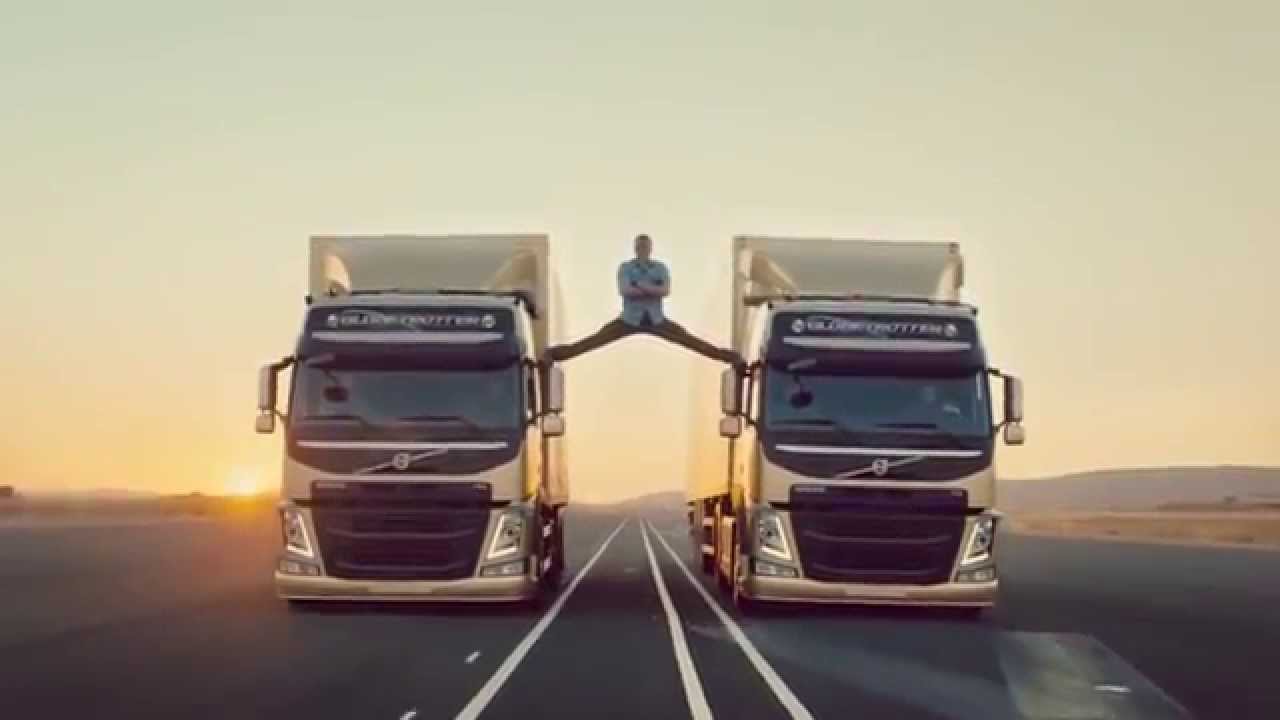
Some ads are remembered not simply because they look beautiful or because they had a large production budget, but because they successfully become part of internet culture — something people understand, remember, and want to play with.
In 2013, Volvo Trucks released what later became one of the most iconic advertising campaigns: The Epic Split. In the video, action star Jean-Claude Van Damme stands between two reversing Volvo trucks, with each foot placed on the side mirrors. As the trucks slowly move apart, he performs a dramatic full split in mid-air.
At first glance, it looks like an impressive stunt. But from MASOU DESIGN’s perspective, what makes this ad truly powerful is not only the stunt itself. It is how Volvo turned a technical product feature into a visual idea that anyone could understand.
Volvo Trucks wanted to communicate the stability and precision of its steering system. If explained in a traditional way, this message could easily become a list of technical specifications, engineering terms, or product data. Instead, Volvo showed the idea directly: if two large trucks can reverse with enough stability for a person to stand between them and perform a split, the system must be extremely precise.
The image is outrageous, but it is also clear. That is what great advertising can do: it does not need to over-explain. The audience understands the point by seeing it.
Volvo Trucks - The Epic Split feat. Van Damme
Why Did This Ad Go Viral?
The brilliance of The Epic Split lies in three things: the visual idea is simple, the memory point is strong, and the product message is clear.
Many brands try to explain technology by saying more. They list features, numbers, functions, and professional terms, hoping that more information will create more understanding. But in reality, most people do not remember complicated product explanations. People remember a scene, a sentence, or a feeling.
Van Damme doing the splits between two trucks is a simple but unforgettable image. You do not even need to watch the whole video. A single screenshot is enough to make people curious: What is this? How is he standing there? How can those trucks be that stable?
Van Damme was also the right person for this idea. He is not just a random celebrity. His public image is closely connected to martial arts, flexibility, and body control. When he performs the split between two trucks, the audience does not only see a stunt. They see a visual contrast between human control and mechanical stability.
That is what strong brand advertising does. It does not force the product onto the audience. It turns product value into an image people are willing to stop and watch.
The Chuck Norris Version: More Than a Parody, Almost a Playful Comeback
After The Epic Split went viral, the internet quickly produced many imitations and parody versions. One of the most famous was the Chuck Norris version, Greetings from Chuck, also known as The Epic Christmas Split.
Strictly speaking, Jean-Claude Van Damme and Chuck Norris were not really arguing with each other. But if we look at it through the lens of internet culture, calling it a kind of “playful comeback” is not too much.
Van Damme standing between two reversing trucks was already an extreme and memorable image. Then the Chuck Norris version raised the scale completely: he stands between two airplanes, doing the splits, with a group of people standing on his head and forming the shape of a Christmas tree.
The image almost feels like a response to the original ad: “You think that was impressive? Let me make it ten times more absurd.”
What makes this parody interesting is not that it simply copied the original ad. It understood the core symbols of The Epic Split: the split, the stability, the impossible-looking scene, and the physical ability of an action star. Then it pushed all of those elements into a more ridiculous and shareable direction.
This also worked because of Chuck Norris’ internet image. In meme culture, Chuck Norris has long been portrayed as a superhuman figure who can do anything. So after Van Damme performed something that looked almost impossible, it felt natural for the internet to ask: if Chuck Norris did it, could he make it even more unbelievable?
Greetings from Chuck - The Epic Christmas Split
This Is the Fascinating Part of Internet Culture: People Continue the Story for the Brand
To us, the most interesting part of this case is not whether the Chuck Norris version was an official ad, or whether the two action stars were actually responding to each other. The real point is this: when an advertising idea is strong enough, people naturally want to keep playing with it.
Volvo Trucks originally wanted to demonstrate the stability of its steering system. But because the visual was so simple, extreme, and memorable, it became a format that people could imitate. At that point, the brand content no longer belonged only to the brand. It became material that audiences, creators, and internet culture could remix.
That is where the real power is. Many ads are watched once and then forgotten. The Epic Split was different. It created a visual rule that anyone could understand: two moving vehicles, one person doing the splits, and a scene that looks impossible but strangely stable.
The simpler the rule, the easier it is for the internet to take over. In that sense, the Chuck Norris version is not just a parody. It is almost like the second episode written by internet culture. It may not be more precise, but it is more absurd, more humorous, and more suited to social sharing.
Further Watching: When the Internet Starts Talking Back, the Ad Has Truly Gone Viral
We have always believed that the real test of whether an ad has entered public memory is not only how much media budget it had, but whether people are willing to play with it.
Only when an idea is clear, memorable, and easy to understand will people spend time imitating it, parodying it, or creating new versions of it. From this point of view, the Chuck Norris version is almost the perfect kind of playful comeback. It does not need to explain much. By making the image even more exaggerated, the audience immediately understands what it is responding to.
That is why we do not see it as just a joke. It is a smart piece of remix culture. It brought attention back to the original Volvo ad and helped turn The Epic Split from a product campaign into an internet symbol that could be extended, joked about, and recreated.
What Can Brands Learn from This Case?
First, a good ad does not always need to explain every function in detail. But it does need to make the key message instantly understandable. Volvo Trucks did not use complicated technical language to explain steering stability. It used an extreme image to help the audience understand the idea of stability.
Second, brand content spreads more easily when it has a strong visual memory point. Van Damme doing the splits between two trucks is simple and unforgettable. It does not need much explanation. Even a screenshot is enough to create curiosity.
Third, parody and remix are not always bad for a brand. Many brands are afraid of losing control when their content is reinterpreted. But in our view, if the original brand idea is clear enough, remix culture can sometimes bring the original campaign back into public discussion.
The Chuck Norris version was not an official Volvo ad, but it made more people talk about Van Damme’s The Epic Split again. In a way, this is one of the best things that can happen to brand content: it is not only seen, but discussed, imitated, and recreated.
Fourth, celebrity endorsement works best when the celebrity’s image fits the brand message. Van Damme’s body control and martial arts image amplified Volvo Trucks’ message of stability, precision, and control. Chuck Norris’ meme image made the parody feel natural and instantly understandable.
From Advertising to Meme: The Real Success Is the Idea People Remember
The Epic Split became iconic not only because Van Damme performed a difficult stunt, but because it connected product function, celebrity image, and visual creativity with unusual precision.
The Chuck Norris parody shows another important point: when an advertising idea is strong enough, internet culture can reshape it into a new story. This kind of spread does not come only from budget. It comes from a clear symbol, a simple structure, and a strong reason for people to share it.
This is also something we often remind clients when working on brand design, website content, and visual communication: do not just place information in front of people. Find a way to turn the key message into something easy to understand, easy to remember, and even easy to talk about.
Great brand content does not only tell people what you sell. It makes people remember you, talk about you, and sometimes even recreate the idea in their own way.
When brand content reaches that point, it is no longer just advertising. It becomes part of culture.