
FAQ

Before starting a design project, clear understanding is often more important than rushing into execution. We have organized frequently asked questions about branding, website design, UI/UX, custom websites, and project collaboration to help you better understand our process, preparation, pricing approach, and design workflow before getting in touch.

Brand Design, Website Design, and E-commerce Website FAQ

A website design project usually includes information architecture planning, content organization, UI visual design, responsive design, front-end development, backend setup, basic SEO settings, and pre-launch testing. The actual scope depends on the website type, number of pages, functional requirements, and whether custom development is needed.

A template website is usually built with an existing layout and is suitable for projects with a limited budget, simple requirements, or a shorter timeline. A custom website is planned based on brand positioning, content structure, user experience, visual style, and functional needs. It offers more flexibility and is better suited for long-term brand growth and SEO structure.

Yes. Website structure is not only about deciding which pages to include. It involves organizing brand information, services, product categories, user needs, and conversion goals. We help plan navigation, page hierarchy, content order, and user flow so the website is easier to understand and better aligned with the brand’s communication goals.

Clients usually need to provide basic materials such as brand introduction, service information, product details, photos, and company information. However, we can help organize the content structure, page focus, and copy direction so the information is easier to read and understand on the website. Full copywriting can also be planned separately depending on the project needs.

Yes. Modern websites need to consider desktop, tablet, and mobile browsing experiences. We plan responsive layouts as part of the website design process. Layouts, buttons, image ratios, text hierarchy, and user interactions across different devices are considered so users can read and navigate smoothly on mobile as well.

Yes. If the website includes a backend management system, you can usually update articles, news, works, product information, FAQs, or selected page content on your own. The editable areas depend on the backend structure and function settings, which will be confirmed during the planning stage.

UI design focuses more on interface visuals and components, such as layout, buttons, typography, colors, images, and interface consistency. UX design focuses on the overall user experience, such as whether information is easy to find, the flow is smooth, the content is understandable, and users can complete their goals. A good website usually needs both UI and UX considerations.

Yes. During website planning, we consider basic SEO structure such as page hierarchy, heading logic, URL structure, meta titles, meta descriptions, image alt text, internal links, and structured data. If you need a more complete SEO content strategy, keyword planning, or long-term optimization, this can be planned as a separate SEO project.

Yes. After the website is completed, we help with pre-launch checks and basic testing, including page display, links, forms, mobile browsing, backend functions, and necessary tracking code setup. If the website needs to be deployed to a specific hosting service, cloud environment, or the client’s own server, this will be evaluated and arranged based on the project needs.

FEATURED WORKS

TEKTRO|Official Website Design

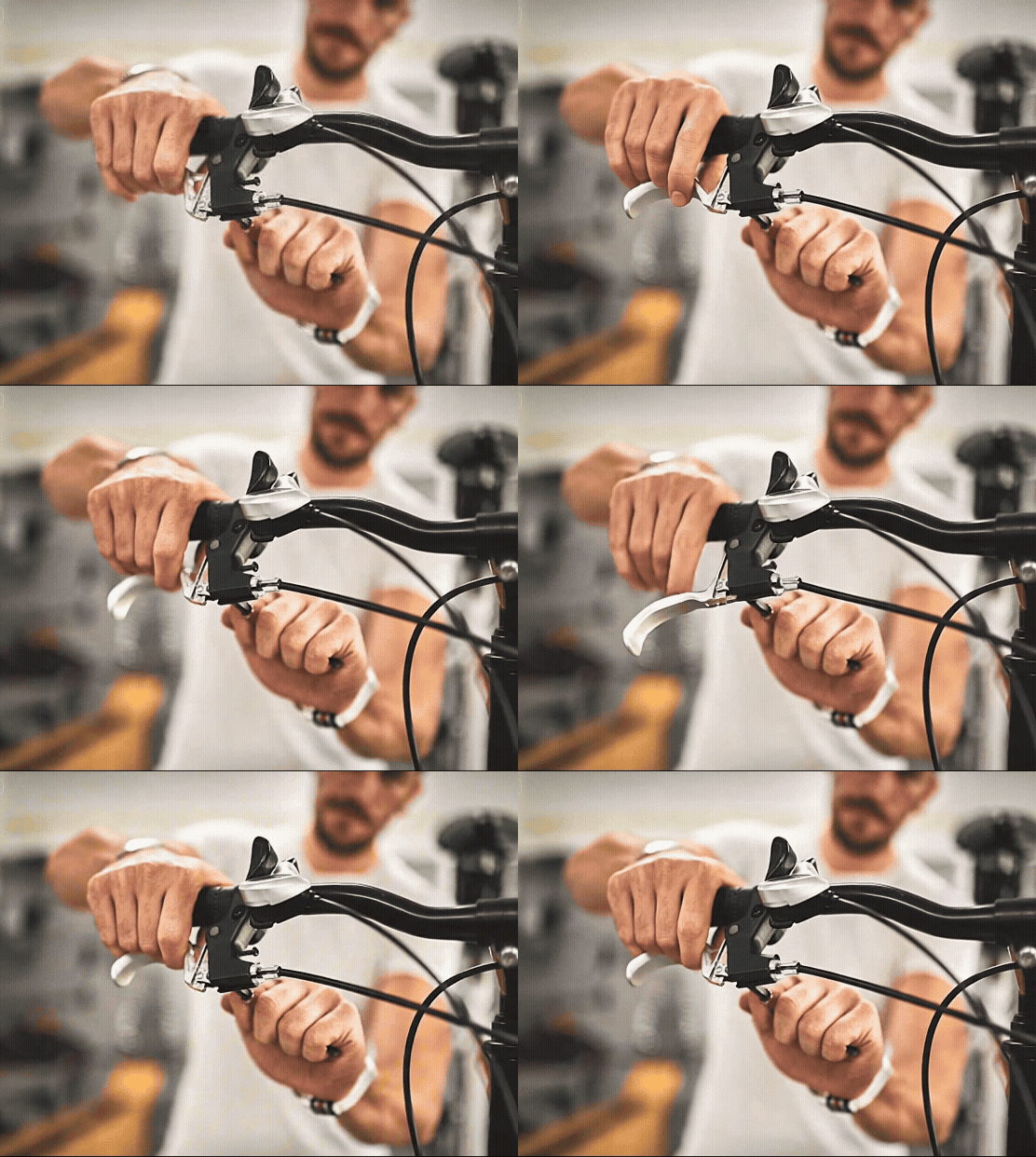
For a major brand’s official website, the challenge is not always about creating a complex visual design. It is about organizing a large amount of product information, internal opinions, and user browsing needs into a clear, manageable, and long-term website structure. As an important brand in bicycle brake systems and components, TEKTRO’s official website needed to present more than brand image. It also had to carry a large number of product models, product series, and application-based information. The focus of this website design project was to reorganize TEKTRO’s product information architecture so users could browse products by type, series, and usage needs. At the time of planning, one of the key challenges was the multi-category product structure. A product might not belong to only one category. It could also relate to different series, specifications, and application scenarios. For this reason, the website required a flexible information architecture that could support both backend product management and frontend browsing. Another major challenge was helping the brand integrate internal opinions through an external project team. A large corporate website often involves product, sales, marketing, and management perspectives, and each team may have different priorities. In this kind of project, the design team is not only responsible for visual execution. It also needs to help organize requirements, clarify priorities, and translate internal opinions into a website structure that users can understand. For a product-driven brand, an official website is more than a visual presentation. It is an important entry point for users to understand product lines, compare models, and build trust in the brand. The TEKTRO official website design focused on making a large product system and internal business needs more organized, helping the brand’s professional value become clearer through the website experience.

TEKTRO|Official Website Design

For a major brand’s official website, the challenge is not always about creating a complex visual design. It is about organizing a large amount of product information, internal opinions, and user browsing needs into a clear, manageable, and long-term website structure. As an important brand in bicycle brake systems and components, TEKTRO’s official website needed to present more than brand image. It also had to carry a large number of product models, product series, and application-based information. The focus of this website design project was to reorganize TEKTRO’s product information architecture so users could browse products by type, series, and usage needs. At the time of planning, one of the key challenges was the multi-category product structure. A product might not belong to only one category. It could also relate to different series, specifications, and application scenarios. For this reason, the website required a flexible information architecture that could support both backend product management and frontend browsing. Another major challenge was helping the brand integrate internal opinions through an external project team. A large corporate website often involves product, sales, marketing, and management perspectives, and each team may have different priorities. In this kind of project, the design team is not only responsible for visual execution. It also needs to help organize requirements, clarify priorities, and translate internal opinions into a website structure that users can understand. For a product-driven brand, an official website is more than a visual presentation. It is an important entry point for users to understand product lines, compare models, and build trust in the brand. The TEKTRO official website design focused on making a large product system and internal business needs more organized, helping the brand’s professional value become clearer through the website experience.

TEKTRO|Official Website Design

For a major brand’s official website, the challenge is not always about creating a complex visual design. It is about organizing a large amount of product information, internal opinions, and user browsing needs into a clear, manageable, and long-term website structure. As an important brand in bicycle brake systems and components, TEKTRO’s official website needed to present more than brand image. It also had to carry a large number of product models, product series, and application-based information. The focus of this website design project was to reorganize TEKTRO’s product information architecture so users could browse products by type, series, and usage needs. At the time of planning, one of the key challenges was the multi-category product structure. A product might not belong to only one category. It could also relate to different series, specifications, and application scenarios. For this reason, the website required a flexible information architecture that could support both backend product management and frontend browsing. Another major challenge was helping the brand integrate internal opinions through an external project team. A large corporate website often involves product, sales, marketing, and management perspectives, and each team may have different priorities. In this kind of project, the design team is not only responsible for visual execution. It also needs to help organize requirements, clarify priorities, and translate internal opinions into a website structure that users can understand. For a product-driven brand, an official website is more than a visual presentation. It is an important entry point for users to understand product lines, compare models, and build trust in the brand. The TEKTRO official website design focused on making a large product system and internal business needs more organized, helping the brand’s professional value become clearer through the website experience.