
FAQ

Before starting a design project, clear understanding is often more important than rushing into execution. We have organized frequently asked questions about branding, website design, UI/UX, custom websites, and project collaboration to help you better understand our process, preparation, pricing approach, and design workflow before getting in touch.

Brand Design, Website Design, and E-commerce Website FAQ

MASOU DESIGN is suitable for businesses and brands that want to build stronger brand recognition, improve website experience, organize product information, or increase brand trust. We often work with traditional industries, B2B companies, product-based brands, medical aesthetics and skincare brands, food brands, lifestyle brands, startups, and companies going through transformation.

The initial inquiry is usually free. We will first understand your needs, current brand situation, and project direction before deciding whether to provide a proposal or quotation. If the request involves in-depth brand consulting, website review, SEO analysis, or full strategic planning, a separate fee may apply depending on the scope.

A brand design project may include brand positioning, naming suggestions, logo design, typography, color system, supporting graphics, brand identity guidelines, business cards, packaging, social media visuals, brand applications, and website visual extensions. The actual scope depends on the brand’s needs, budget, and future applications.

Logo design focuses on creating the core symbol of a brand. Visual identity design is a more complete system that includes the logo, typography, color palette, fonts, supporting graphics, layout style, and application guidelines. In simple terms, the logo is the face of the brand, while visual identity helps the brand stay recognizable across different media.

We can start the discussion, but we usually do not recommend jumping directly into logo design before the brand positioning is clear. A logo is not just a graphic — it reflects brand personality, target audience, industry positioning, and communication direction. Without a clear foundation, the result may look good but not truly fit the brand or its future applications.

Depending on the project scope, we usually provide logo source files, vector files, image files, color specifications, font information, and brand identity guidelines. If the project includes business cards, packaging, social media templates, or other applications, the corresponding final artwork files will also be provided based on the agreement. The exact deliverables will be confirmed in the quotation and contract.

Yes, and this is one of the key values of visual identity design. A strong identity is not just a logo. It can be extended to business cards, packaging, flyers, presentations, social media posts, website visuals, e-commerce pages, and physical spaces, helping the brand maintain a consistent visual impression across different touchpoints.

Not always. Whether you need a brand guideline depends on the brand scale, application range, and future management needs. If the brand will be used across multiple channels, stores, packaging, social media, websites, or internal teams, a brand guideline is very helpful. For early-stage brands, a basic identity guideline may be enough at the beginning and can be expanded later.

Yes. After the brand design is completed, it can be extended into packaging, website design, exhibition design, social media templates, advertising visuals, catalogs, uniforms, signage, or physical space visuals. When the brand identity system is clear from the beginning, future applications can be developed more consistently and efficiently.

FEATURED WORKS

TEKTRO|Official Website Design

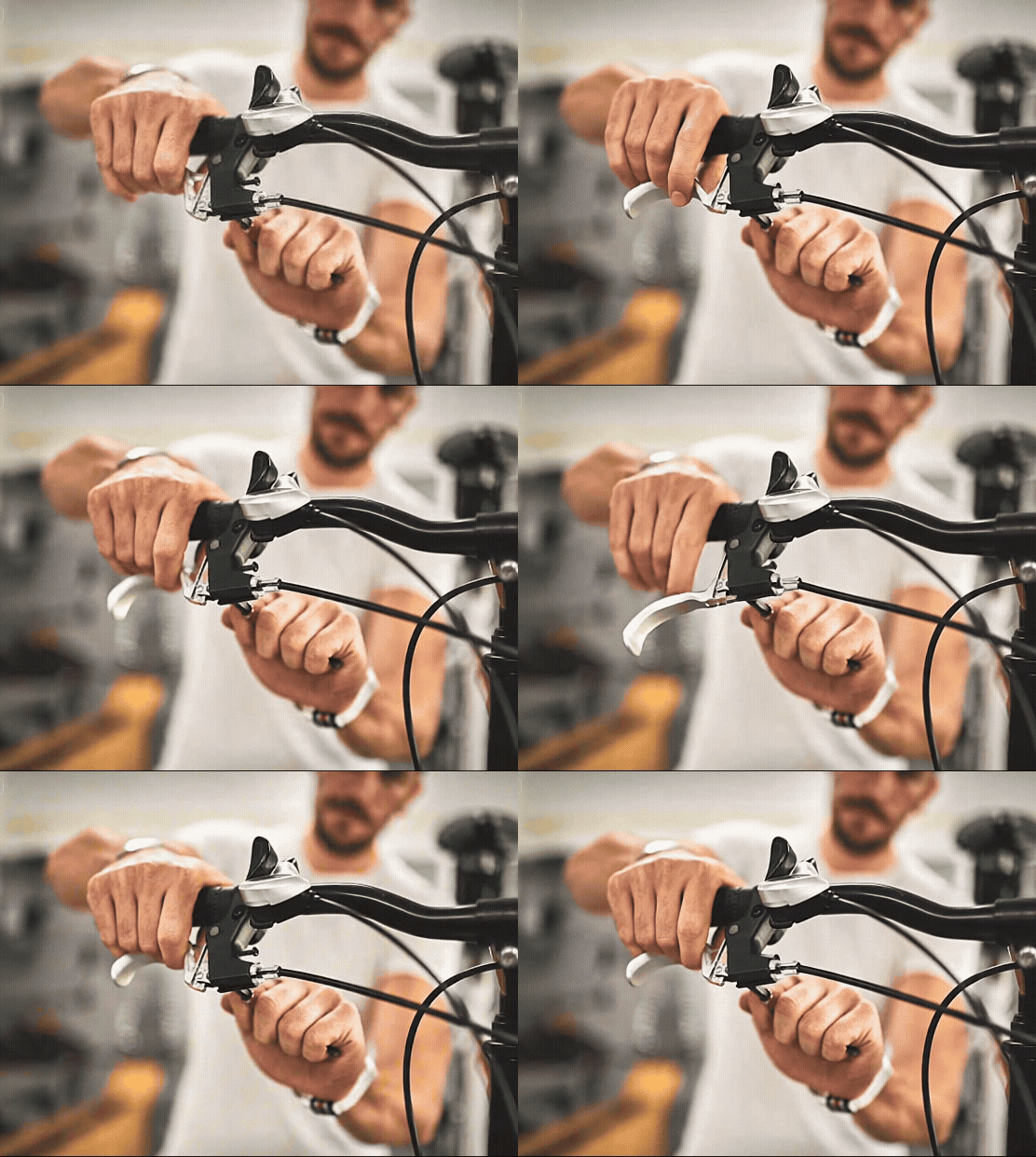
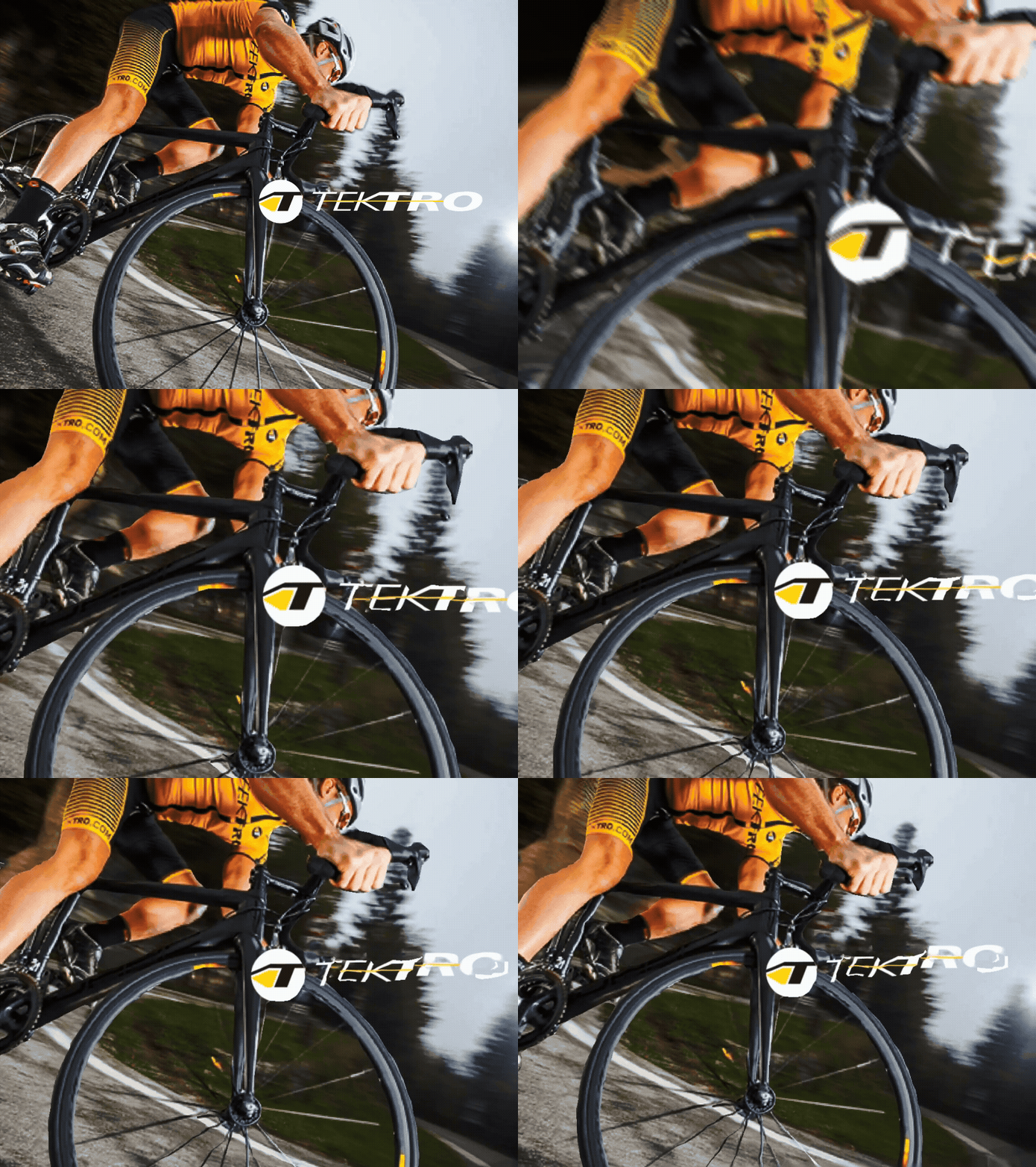
For a major brand’s official website, the challenge is not always about creating a complex visual design. It is about organizing a large amount of product information, internal opinions, and user browsing needs into a clear, manageable, and long-term website structure. As an important brand in bicycle brake systems and components, TEKTRO’s official website needed to present more than brand image. It also had to carry a large number of product models, product series, and application-based information. The focus of this website design project was to reorganize TEKTRO’s product information architecture so users could browse products by type, series, and usage needs. At the time of planning, one of the key challenges was the multi-category product structure. A product might not belong to only one category. It could also relate to different series, specifications, and application scenarios. For this reason, the website required a flexible information architecture that could support both backend product management and frontend browsing. Another major challenge was helping the brand integrate internal opinions through an external project team. A large corporate website often involves product, sales, marketing, and management perspectives, and each team may have different priorities. In this kind of project, the design team is not only responsible for visual execution. It also needs to help organize requirements, clarify priorities, and translate internal opinions into a website structure that users can understand. For a product-driven brand, an official website is more than a visual presentation. It is an important entry point for users to understand product lines, compare models, and build trust in the brand. The TEKTRO official website design focused on making a large product system and internal business needs more organized, helping the brand’s professional value become clearer through the website experience.

TEKTRO|Official Website Design

For a major brand’s official website, the challenge is not always about creating a complex visual design. It is about organizing a large amount of product information, internal opinions, and user browsing needs into a clear, manageable, and long-term website structure. As an important brand in bicycle brake systems and components, TEKTRO’s official website needed to present more than brand image. It also had to carry a large number of product models, product series, and application-based information. The focus of this website design project was to reorganize TEKTRO’s product information architecture so users could browse products by type, series, and usage needs. At the time of planning, one of the key challenges was the multi-category product structure. A product might not belong to only one category. It could also relate to different series, specifications, and application scenarios. For this reason, the website required a flexible information architecture that could support both backend product management and frontend browsing. Another major challenge was helping the brand integrate internal opinions through an external project team. A large corporate website often involves product, sales, marketing, and management perspectives, and each team may have different priorities. In this kind of project, the design team is not only responsible for visual execution. It also needs to help organize requirements, clarify priorities, and translate internal opinions into a website structure that users can understand. For a product-driven brand, an official website is more than a visual presentation. It is an important entry point for users to understand product lines, compare models, and build trust in the brand. The TEKTRO official website design focused on making a large product system and internal business needs more organized, helping the brand’s professional value become clearer through the website experience.

TEKTRO|Official Website Design

For a major brand’s official website, the challenge is not always about creating a complex visual design. It is about organizing a large amount of product information, internal opinions, and user browsing needs into a clear, manageable, and long-term website structure. As an important brand in bicycle brake systems and components, TEKTRO’s official website needed to present more than brand image. It also had to carry a large number of product models, product series, and application-based information. The focus of this website design project was to reorganize TEKTRO’s product information architecture so users could browse products by type, series, and usage needs. At the time of planning, one of the key challenges was the multi-category product structure. A product might not belong to only one category. It could also relate to different series, specifications, and application scenarios. For this reason, the website required a flexible information architecture that could support both backend product management and frontend browsing. Another major challenge was helping the brand integrate internal opinions through an external project team. A large corporate website often involves product, sales, marketing, and management perspectives, and each team may have different priorities. In this kind of project, the design team is not only responsible for visual execution. It also needs to help organize requirements, clarify priorities, and translate internal opinions into a website structure that users can understand. For a product-driven brand, an official website is more than a visual presentation. It is an important entry point for users to understand product lines, compare models, and build trust in the brand. The TEKTRO official website design focused on making a large product system and internal business needs more organized, helping the brand’s professional value become clearer through the website experience.